
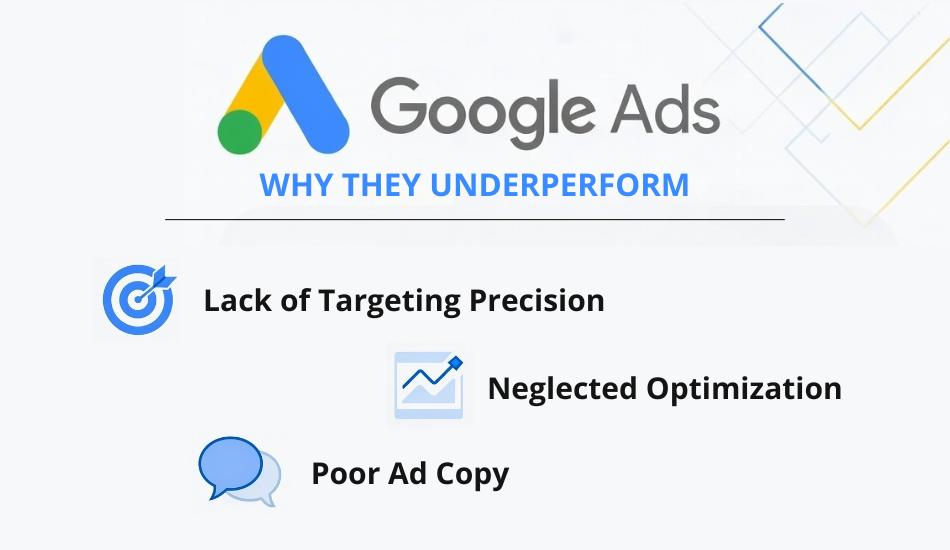
Google Ads often gets blamed when results disappoint.
The platform is called expensive, unpredictable, or broken. Budgets are paused. Agencies are replaced. Campaigns are restarted from scratch.
In reality, Google Ads usually does exactly what it is designed to do. It exposes weaknesses that already exist in a business's marketing system.
For founders and in-house marketers, this distinction matters. If you treat Google Ads as the problem, you fix the wrong things. If you understand what Google Ads is actually revealing, performance changes.
Google Ads Is a Mirror, Not a Magic Lever
Google Ads does not create demand. It captures intent.
When campaigns struggle, it is rarely because:
- Keywords are slightly off
- Headlines need minor tweaks
- Budgets are too small
Those factors matter later. They are not where most failures begin.
Paid Traffic Removes the Buffer
Organic channels hide problems. Paid traffic does not.
Google Ads sends people who are actively searching for solutions. When those people do not convert, it usually points to:
- Unclear positioning
- Weak offers
- Broken tracking
- Friction in the funnel
The ads did their job. The system behind them did not.
Where Google Ads Breaks Down Most Often
Patterns repeat across industries and account sizes.
No Agreement on What Success Looks Like
Many accounts optimize for clicks because no one defined the outcome.
Is success:
- A booked call?
- A qualified lead?
- A purchase?
- A pipeline contribution?
Without a shared definition, Google Ads optimizes noise.
Mismatched Intent and Landing Pages
Search intent is specific. Many landing pages are not.
Businesses send high-intent traffic to pages that:
- Speak in generalities
- Ask for too much too soon
- Fail to answer the question that triggered the search
When intent and message do not align, spend increases and confidence drops.
Broken or Incomplete Conversion Tracking
This is one of the most common issues Peripheral Media sees.
- Key actions are not tracked
- Events fire inconsistently
- Offline conversions are ignored
- Optimization decisions are made on partial data
Without reliable tracking, Google Ads cannot learn. Neither can the team managing it.
Why "More Optimization" Is Often the Wrong Move
When performance lags, the instinct is to optimize harder.
More keywords. More ads. More tests.
This often accelerates failure.
Optimization Without Strategy Creates Motion, Not Progress
Optimization assumes the foundation is sound.
If the offer is unclear or the funnel is broken, optimization simply pushes more people into the same problem. Spend increases. Results do not.
When Google Ads Actually Works Well
Accounts that perform consistently tend to share a few traits.
Clear Offers With a Specific Outcome
Strong accounts answer one clear question: "What should this person do next?"
Not five options. One.
Clean Data and Patience
Google Ads needs time and signal.
Frequent resets, emotional budget changes, and premature conclusions prevent learning. Teams that respect the learning phase make better decisions later.
Google Ads Is Treated as Part of a System
High-performing accounts view Google Ads as:
- One input, not the whole machine
- Connected to email, sales, and follow-up
- Accountable to real business outcomes
This mindset changes how campaigns are built and evaluated.
Frequently Asked Questions About Google Ads Performance
Why do Google Ads fail for so many businesses?
Most failures stem from unclear goals, weak offers, or poor tracking, not the ad platform itself.
Is Google Ads still effective in competitive markets?
Yes, but effectiveness depends on differentiation and execution, not just budget.
How long should Google Ads run before judging results?
Meaningful insights usually take several weeks to months, depending on traffic volume and consistency.
What is the biggest mistake businesses make with Google Ads?
Launching campaigns before defining conversions and success metrics.
Should Google Ads be paused if results are poor?
Sometimes. But pausing without diagnosing the root issue often leads to repeated failure.
Can small budgets work in Google Ads?
They can, when scope is narrow and expectations are realistic.
Why do clicks not turn into leads?
Because the landing page, message, or follow-up does not match the intent behind the search.
How important is conversion tracking?
Critical. Without it, optimization is guesswork.
Does automation fix Google Ads issues?
Automation amplifies structure. It does not replace strategy.
When is Google Ads the wrong channel?
When offers are unclear, sales processes are broken, or demand has not been validated.
Final Perspective
Google Ads does not punish businesses. It reveals them.
When performance is poor, the most productive question is not "What's wrong with the ads?" but "What is this traffic telling us about our system?"
Businesses that ask the second question tend to see better results over time.
For more information, visit the Solutions page.