
Case Study · Pizza Toppers Seasoning (Anonymized)
How A B2B Seasoning Brand Turned 800+ Idle Subscribers Into A Multi-Channel Revenue Engine.
Seven Strategic Moves Across 45-60 Days — Without Spending A Dollar On Ads.
Service: Email marketing + CRM automation · Industry: B2B food / specialty manufacturing · Region: U.S. · Engagement window: 45-60 days
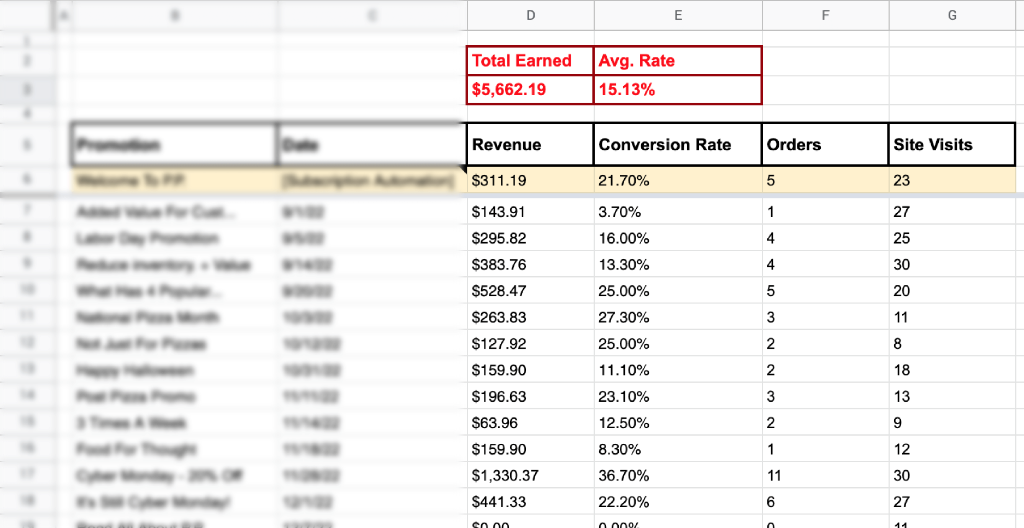
$5,662 in campaign-attributed revenue across 45-60 days · 15.13% average conversion rate · Recurring subscription revenue not shown.
Before
An 800-Subscriber List That Was Doing Nothing.
A B2B seasoning manufacturer — Pizza Toppers Seasoning Packets, anonymized — had built a list of 800+ email subscribers over time. Pizzerias, restaurants, food service operators. People who'd opted in to hear from the brand at some point and then... mostly didn't.
The list lived in SquareSpace. The email cadence was once a month. The message was the same for everyone — no matter what they'd bought, when they last ordered, or what kind of business they were running. There was no welcome sequence for new subscribers. There were no triggered flows. There were no segments.
The list was technically a marketing asset. In practice, it was a contact archive.
When they came to us, the question wasn't "how do we send more emails." The question was: what's actually possible if you treat 800+ existing relationships as a real channel — instead of a once-a-month broadcast?
The answer turned out to be: a lot more than they expected, in less time than they expected, without spending a dollar on ads.
The Work
Seven Distinct Interventions, Compounding On Each Other.
Sending "more email" wouldn't have moved the needle on this list. The work was rebuilding the program from the ground up — and adding revenue mechanisms that didn't exist before.
01
Behavioral Segmentation
We segmented the list by purchase history, business type, and engagement signals. A pizzeria that ordered monthly got different messaging than a restaurant that had ordered once 18 months ago. The one-size-fits-all era ended.
02
Seasonal Campaign Cadence
Weekly campaigns timed to relevant business moments — National Pizza Month, holiday promotions, Cyber Monday, end-of-quarter inventory cycles. Each campaign tied to a specific reason to act now, not a generic newsletter cadence.
03
Bulk-Order Pricing Tiers
B2B buyers don't think in single-unit purchases — they think in cases and pallets. We introduced tiered bulk pricing, structured the offers around real ordering behavior, and put it directly into the email campaigns. Larger orders, faster.
04
Subscription Auto-Send Program (NEW REVENUE STREAM)
We launched a monthly subscription program — pizzerias and restaurants could opt into recurring auto-shipment of seasoning packets. This created predictable monthly cash flow that hadn't existed before. The recurring revenue isn't shown in the campaign-attribution numbers — it sits on top.
05
D2C Product Line Expansion
Multi-seasoned home-use packets — designed for individual consumers, not just commercial operators. This opened a brand-new customer base beyond the B2B core, and created a whole second growth vector for the brand.
06
Social-Tagging Referral Mechanic
10% discount for orders above a threshold when customers tagged the brand on social media. Turned satisfied customers into a low-cost organic awareness engine — every tagged post reached new audiences who hadn't heard of the brand yet.
07
Education-Based Content Layer
Ingredient quality, sourcing stories, the 'why' behind the seasoning blends. Customers had been ordering for years without knowing what made the product different. Education content built brand depth and gave subscribers a reason to keep opening emails — even when there wasn't a discount attached.
What It Produced
$5,662 In Tracked Revenue. A New Subscription Channel. A New D2C Customer Base.
$5,662
Campaign-attributed revenue
45-60 day window
15.13%
Average conversion rate across campaigns
Not just open rate or click rate — actual purchase conversion
$0
Spent on advertising during this window
Pure email + list reactivation work
The headline number on the campaign tracking sheet is $5,662 — but that's only half the story.
The campaign-attributed revenue is what's directly traceable to the email sends in the tracking spreadsheet. It's real, it's measurable, and it's notable for a list that was producing essentially zero before this work started.
But it doesn't include:
- The recurring monthly revenue from the subscription auto-send program — which by design produces revenue every single month after launch, indefinitely, without requiring new campaign work. That number wasn't shown in the original tracking screenshot.
- The D2C revenue from the multi-seasoned home-use product line — which extended the brand into an entirely new customer category. Some of that revenue traces back to email campaigns; some traces back to social-tagged organic awareness; some traces back to existing B2B customers ordering for personal use after seeing the new product.
- The brand-awareness lift from the social-tagging referral mechanic — which can't be quantified in dollars but produced new email subscribers, new website visits, and new customer relationships that compound over time.
The campaign tracking shows what's measurable. The full impact of the work is bigger than the spreadsheet.
The Takeaway
Email Programs Don't Need More Sends. They Need More Strategy.
Most service businesses with underperforming email programs assume the answer is "send more emails" or "write better subject lines." Those things help. But they're tactical fixes layered on top of a strategic gap.
The real gap is usually this: the list is being treated as a megaphone instead of as a relationship channel. One message broadcast to everyone, regardless of who they are or what they've bought. That's why so many lists sit dormant — not because the list is bad, but because it's being used like a billboard when it's actually a conversation.
When you start treating an existing list as a relationship — segmenting it, building flows, expanding what's offered, layering in education, opening new channels through it — the results compound fast.
45-60 days from dormant list to multi-channel revenue engine. No ads. No cold outreach. Just the work most agencies skip because it isn't flashy enough to put in a pitch deck.
What Could Your List Actually Be Doing?
If your email program is sitting at "one a month and hoping" — let's talk about what's possible.
See If We're A Good Fit →Read other case studies: